Note
Go to the end to download the full example code.
Line-of-Sight and Field-of-View Control#
This example demonstrates the two complementary APIs for aiming and framing the observer’s camera in helioprojective coordinates:
observer_los_view— sets the field of view as explicit angular extents \((x_0, x_1, y_0, y_1)\) in degrees, measured from Sun-center along the observer’s line of sight.observer_fov_view— sets the (square) field of view by specifying the minimum impact radius \(r_{\min}\) (in \(R_\odot\)) that any line of sight must clear.
Both properties require observer_position
to be set first, because the focal-point calculation depends on the observer
distance.
from __future__ import annotations

import numpy as np

from pyvisual import Plot3d
LOS View — Asymmetric Field of View#
observer_los_view accepts a
4-tuple (x0, x1, y0, y1) of helioprojective angular extents in degrees.
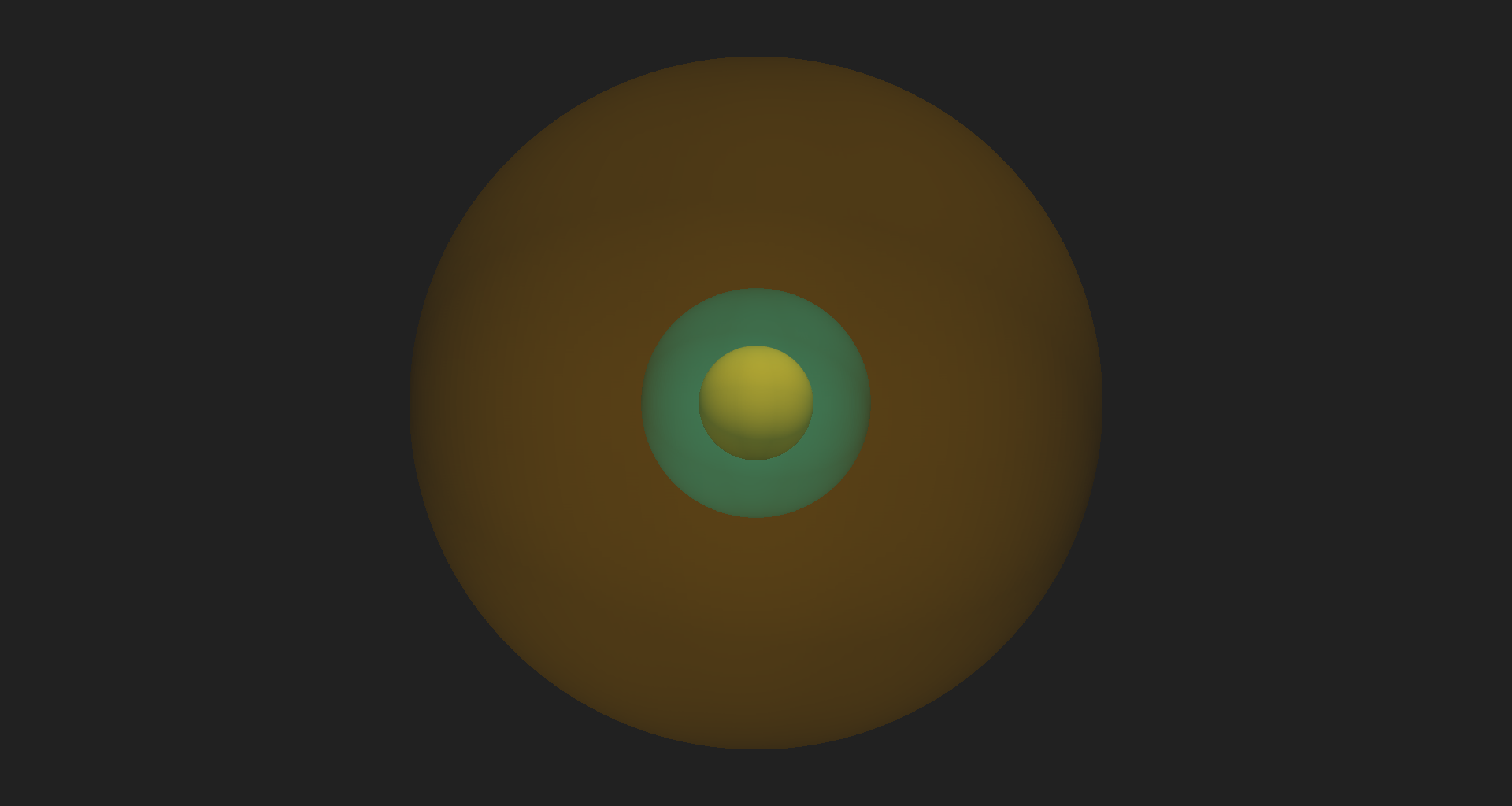
Here the observer sits at \(r = 50\,R_\odot\) on the equatorial plane
and looks back at the Sun with a wide horizontal sweep
(\(-15°\) to \(+15°\)) and a narrower vertical window
(\(-8°\) to \(+8°\)), placing the viewport aspect ratio at
\(30/16 \approx 1.875\).
The focal point is automatically computed from the center of the angular range via the Thomson sphere, so the camera always aims along the correct helioprojective direction.
plotter = Plot3d()
plotter.add_sun()
plotter.add_shell(inner_radius=2.0, outer_radius=2.0, opacity=0.15, color="cyan")
plotter.add_shell(inner_radius=6.0, outer_radius=6.0, opacity=0.10, color="orange")
plotter.observer_position = 50, np.pi / 2, 0
plotter.observer_los_view = -15, 15, -8, 8
plotter.show()
LOS View — Off-Center Pointing#
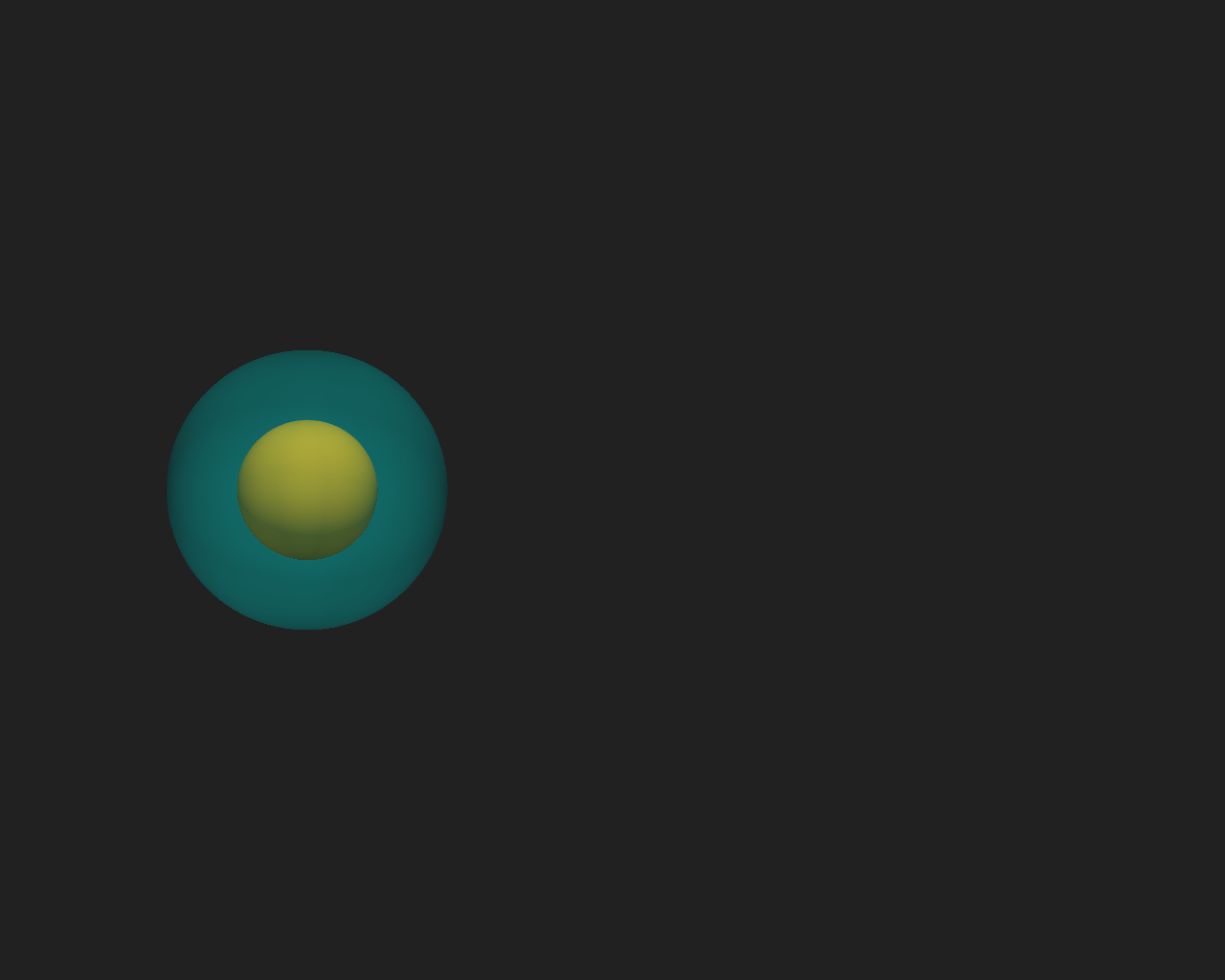
Shifting the angular range off-center moves the focal point away from
Sun-center. Here the horizontal window is displaced by \(+5°\)
(x0 = -5, x1 = +15) so that the camera is biased to the east
limb of the Sun. The vertical extent remains symmetric.
plotter = Plot3d()
plotter.add_sun()
plotter.add_shell(inner_radius=2.0, outer_radius=2.0, opacity=0.15, color="cyan")
plotter.observer_position = 50, np.pi / 2, 0
plotter.observer_los_view = -5, 15, -8, 8
plotter.show()
FOV View — Impact-Parameter Framing#
observer_fov_view is a
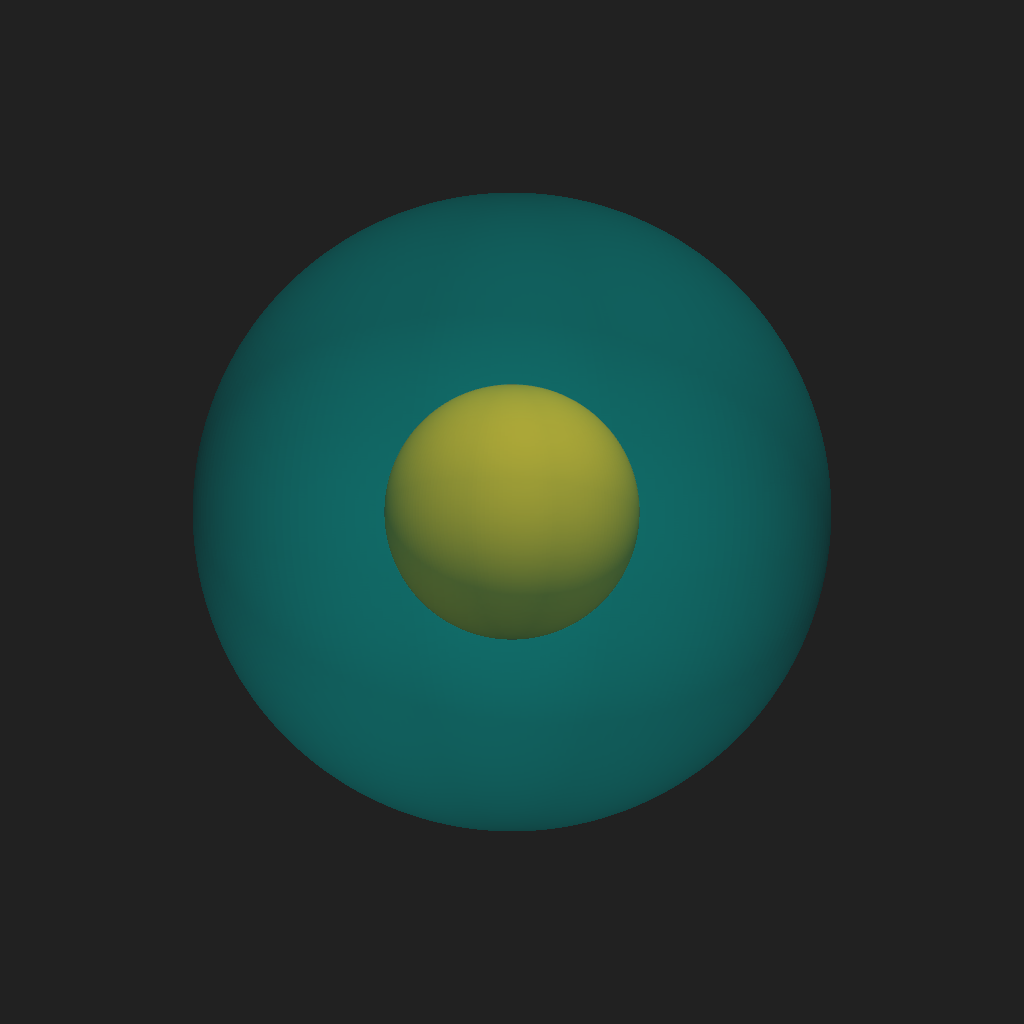
higher-level alternative. Instead of raw angles, you supply a single scalar
\(r_{\min}\).
The result is a square viewport whose edge lines of sight just graze the sphere of radius \(r_{\min}\) around Sun-center. Setting \(r_{\min} = 1\,R_\odot\) frames the entire solar disc with minimal margin; larger values show the extended corona.
plotter = Plot3d()
plotter.add_sun()
plotter.add_shell(inner_radius=2.5, outer_radius=2.5, opacity=0.15, color="cyan")
plotter.observer_position = 50, np.pi / 2, 0
plotter.observer_fov_view = 4
plotter.show()
/Users/rdavidson/MHDweb/pyvisual/pyvisual/utils/geometry.py:968: UserWarning: 'where' used without 'out', expect unitialized memory in output. If this is intentional, use out=None.
  np.where(mask, np.pi - np.arcsin(2 - ratio, where=mask), np.arcsin(ratio, where=~mask))
Comparing Impact Radii#
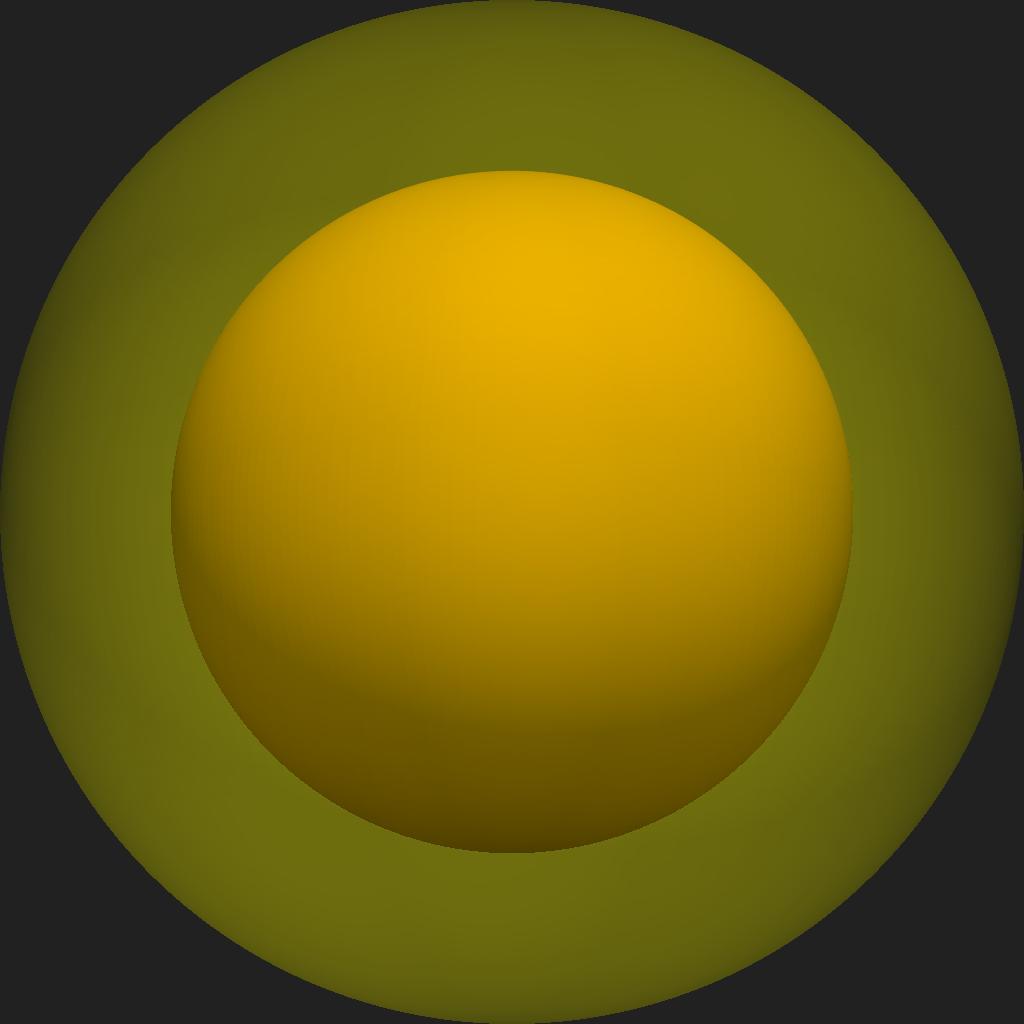
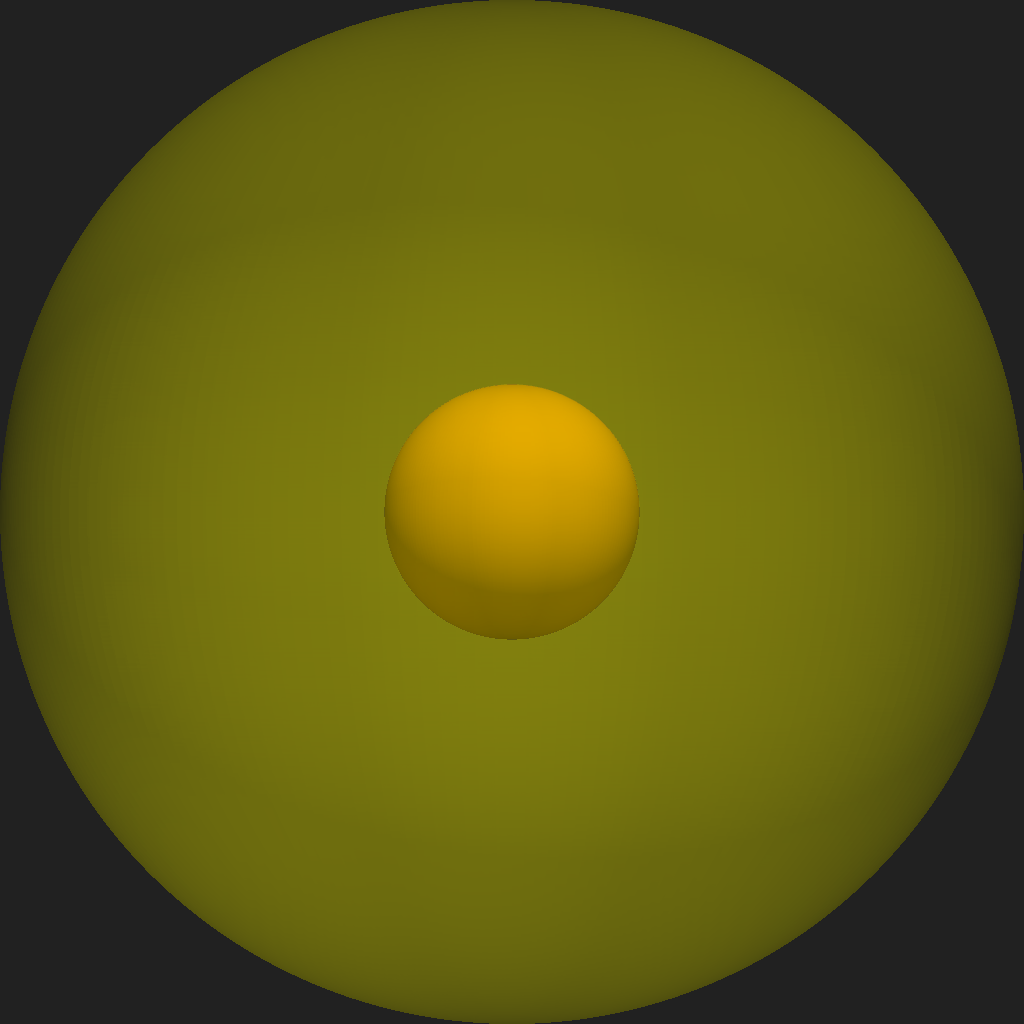
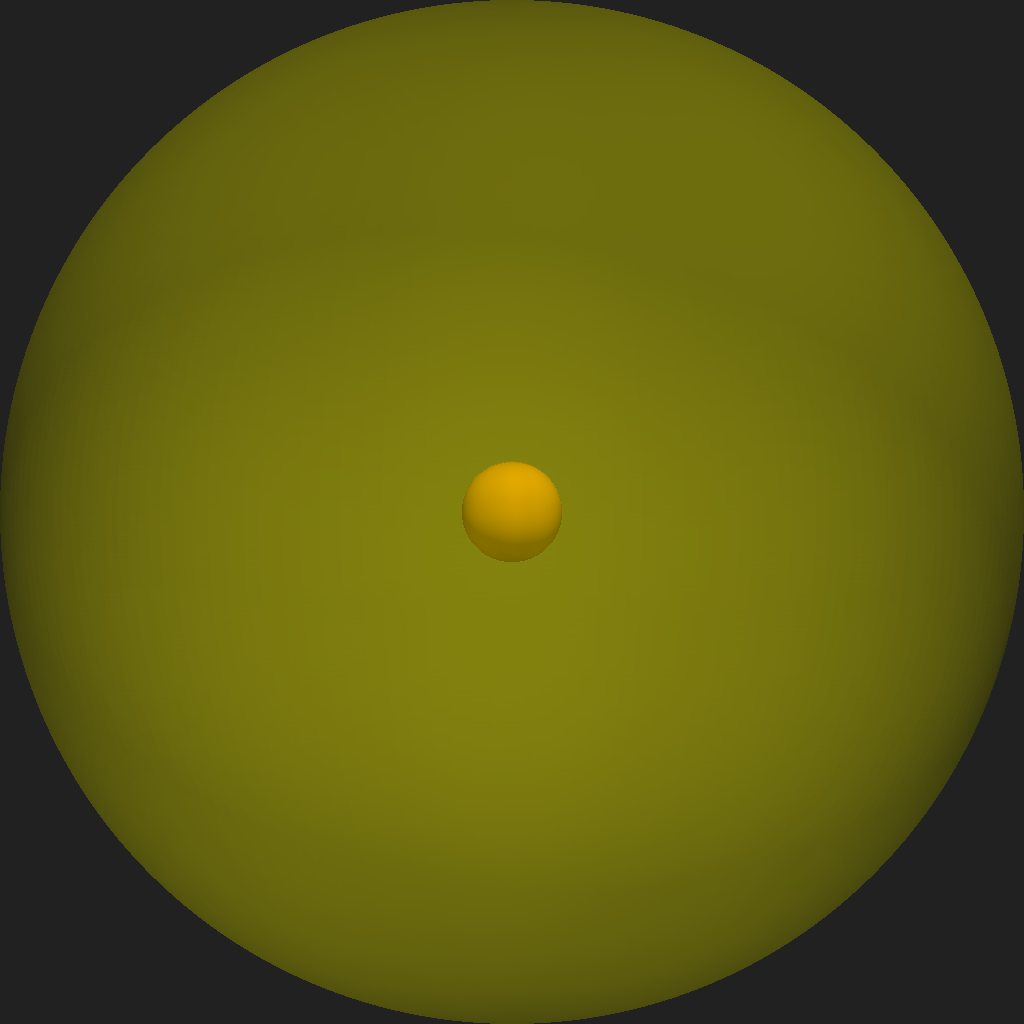
The same observer position is used at three different impact radii to illustrate how a smaller \(r_{\min}\) zooms in on the solar disc while a larger one opens the view out to the extended corona.
Note
The observer distance is fixed at \(50\,R_\odot\) throughout. Changing \(r_{\min}\) only rescales the angular FOV; it does not move the camera.
Total running time of the script: (0 minutes 7.845 seconds)